A jar of sauerkraut is not a personality.
It is a useful, tangy thing in the fridge that can make a bowl of leftovers taste less like Tuesday at a desk.
Fermented foods are getting renewed attention, but you do not need to treat them as medicine or add them to every meal. Some paleo approaches include plain fermented vegetables; others draw the line differently. Read the ingredients and decide what fits your own version.
Use it like a condiment
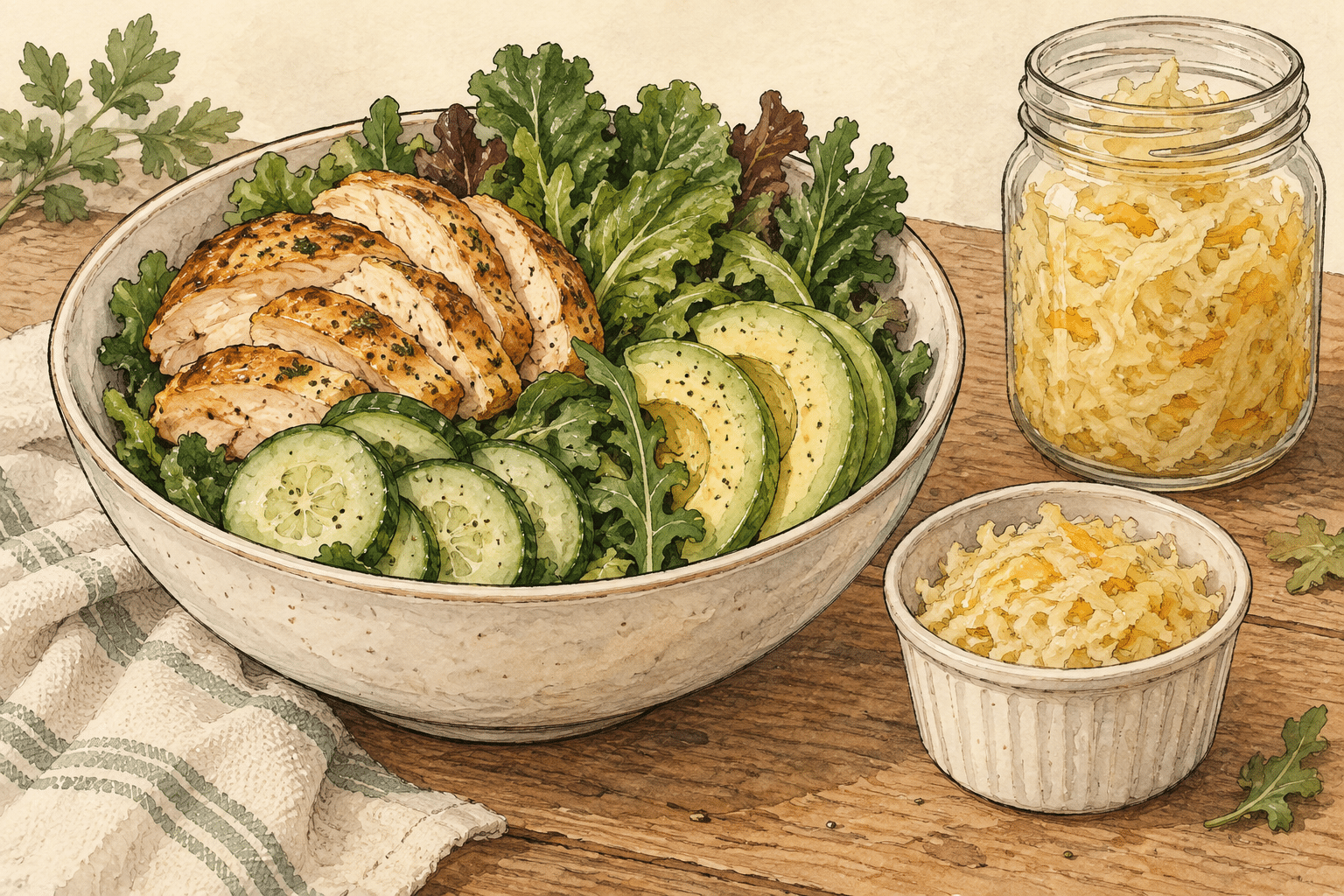
A spoonful beside roast chicken, eggs, or a lunch bowl is plenty. The sharpness works nicely with creamy avocado, roasted vegetables, and anything that has spent a little too long in the microwave.
Look for a short ingredient list if that matters to you: vegetables, salt, and perhaps spices. Sauerkraut and kimchi can contain ingredients you avoid, so the label is worth the ten seconds.
A quick leftover chicken bowl
This is a template for two lunches, not a rulebook with a cabbage-shaped cover.
- 2 handfuls of salad greens
- 250 to 300 g cooked chicken, sliced
- ½ cucumber, 1 avocado, and a handful of grated carrot
- 1 lemon, 1 tablespoon olive oil, black pepper
- 2 to 4 tablespoons plain sauerkraut, served on the side
- Whisk the lemon juice, olive oil, and pepper in a bowl. Toss through the greens.
- Add the chicken, cucumber, avocado, and carrot. If the chicken is cold, that is fine; lunch has no dress code.
- Serve the sauerkraut in a small side dish so you can add as much or as little as you like.
Small is still useful
If you are new to fermented vegetables, try a little with a meal and see how you like the flavour. You are allowed to decide that you prefer the jar on the shelf.
Food does not have to carry a health claim to earn space in the fridge. Sometimes it just makes the chicken bowl better.